Flock Around – How Birdwatching and Wildlife Photography Create a Dynamic Observation Experience

In Flock Around, one of the most important and widely discussed systems is the game’s evolving migration mechanic. While many survival games rely on static maps, fixed resources, or predictable AI behavior, Flock Around builds its entire identity around dynamic migration patterns that constantly reshape player decisions. This system has become one of the game’s defining topics because it transforms movement itself into the foundation of survival, strategy, and emotional tension.
The migration system is not simply a method of traveling from one area to another. Instead, it functions as a living ecosystem that influences resource flow, predator behavior, environmental stability, and flock psychology. Every migration event changes how players interact with the world, forcing them to adapt continuously rather than relying on memorized strategies.
This article explores a specific news-focused topic surrounding the game: how Flock Around’s dynamic migration systems are reshaping emergent survival gameplay and redefining player-driven storytelling. Rather than discussing beginner strategies or generic mechanics, this analysis focuses on how the migration system affects pacing, environmental pressure, social behavior within the flock, and long-term replayability.
The Introduction of Dynamic Migration Systems
Moving Beyond Static Survival Design
Traditional survival games often use static environments where resources respawn predictably and player routes become optimized quickly. Flock Around deliberately rejects this structure.
The migration system ensures that:
- Resource locations shift
- Predator zones evolve
- Safe regions disappear over time
This creates a constantly changing survival landscape.
Why This System Matters
The importance of migration lies in uncertainty. Players cannot rely on permanent control over territory because movement itself becomes mandatory.
This changes the emotional structure of the game:
- Safety becomes temporary
- Exploration becomes necessary
- Adaptation becomes the core skill
The game transforms survival from occupation into continuous transition.
Environmental Movement as Core Gameplay
The World Never Truly Stops
One of the game’s defining characteristics is environmental fluidity. Migration patterns are tied directly to ecological shifts.
Examples include:
- Grassland depletion
- Seasonal food movement
- Predator relocation patterns
Migration Changes the Meaning of Space
In most games, locations maintain fixed value. In Flock Around, a safe region today may become dangerous tomorrow.
This creates:
- Temporary territorial value
- Dynamic route planning
- Emotional attachment to unstable locations
Players experience geography as something alive rather than static.
Resource Scarcity and Forced Relocation
Scarcity Creates Narrative Pressure
Resource depletion is one of the primary drivers of migration.
As food disappears:
- Flocks become restless
- Movement becomes riskier
- Internal stability weakens
Migration as Survival Necessity
Relocation is never optional for long.
Players must constantly evaluate:
- Remaining food reserves
- Distance to safer regions
- Predator concentration nearby
The system creates tension because staying too long in one place guarantees decline.
Predator Adaptation to Migration Routes
Predators Learn Migration Patterns
One of the game’s most impressive systems is how predators respond to flock movement over time.
Predators begin:
- Tracking common routes
- Ambushing bottlenecks
- Pressuring exhausted flocks
Why This Changes Gameplay Dramatically
Players cannot simply repeat successful paths indefinitely.
Predictable migration creates vulnerability.
This forces players to:
- Diversify movement patterns
- Balance safety against efficiency
- Think strategically about visibility
The migration system becomes a battle of adaptation between player behavior and environmental response.
Emergent Storytelling Through Migration
Every Migration Creates Unique Narratives
Because migration systems are dynamic, players naturally generate personal stories through movement decisions.
Examples include:
- Losing part of the flock during storms
- Discovering emergency resource zones
- Escaping predators through unexpected terrain
Why Emergent Stories Feel Powerful
These events are not scripted.
Instead, they emerge naturally from interactions between:
- Environmental systems
- Flock behavior
- Resource pressure
- Weather conditions
This creates emotionally memorable gameplay experiences unique to each session.
Seasonal Migration and Ecological Pressure
Seasons Reshape the Entire World
Seasonal transitions dramatically alter migration priorities.
Different seasons affect:
- Resource growth rates
- Terrain accessibility
- Predator aggression
Winter as a Psychological Threat
Cold seasons create especially strong pressure because:
- Food becomes scarce rapidly
- Movement slows significantly
- Shelter becomes critical
The migration system becomes emotionally intense during seasonal collapse.
Social Behavior Within the Flock
Migration Affects Group Psychology
Long migrations influence flock stability and behavior.
Stress factors include:
- Starvation risk
- Predator pressure
- Environmental exhaustion
Cohesion Under Pressure
Large migrations test group unity.
Poor migration management often causes:
- Fragmentation
- Delayed regrouping
- Increased vulnerability
The flock begins behaving like a social organism under stress rather than a collection of units.
Exploration and Discovery Through Migration
Migration Encourages Organic Exploration
Unlike open-world games that encourage checklist exploration, Flock Around uses migration pressure to create natural discovery.
Players explore because they must survive.
Hidden Regions and Adaptive Routes
Migration often reveals:
- Hidden resource valleys
- Safer terrain corridors
- Unexpected environmental patterns
This creates a stronger emotional connection to exploration because discovery emerges from necessity rather than completionism.
Replayability Created by Dynamic Systems
No Two Migration Cycles Feel Identical
Because migration systems interact dynamically with weather, predators, and resources, sessions evolve differently each time.
This increases replay value significantly.
The Death of Fixed Meta Strategies
Static optimization becomes impossible because:
- Resource patterns shift
- Threat locations evolve
- Seasonal timing changes
Players must continuously adapt rather than memorize.
This keeps long-term gameplay fresh.
The Future of Emergent Survival Design
Why Flock Around Matters
The migration system represents a larger evolution in survival game design.
Instead of focusing solely on crafting or combat, the game emphasizes:
- Ecological interaction
- Movement psychology
- Dynamic environmental pressure
A New Direction for Survival Simulations
Flock Around demonstrates that survival gameplay can become more emotionally engaging when the world itself behaves unpredictably.
Its migration systems create:
- Natural tension
- Organic storytelling
- Long-term strategic depth
This design philosophy may influence future survival titles significantly.
Conclusion
Flock Around’s dynamic migration system transforms movement into the emotional and strategic heart of the entire experience. By constantly shifting resources, altering predator behavior, and forcing adaptation through environmental instability, the game creates a survival structure that feels alive, unpredictable, and deeply immersive.
What makes the system remarkable is not simply its complexity, but how naturally it generates emergent stories and emotional tension. Every migration becomes a narrative shaped by scarcity, geography, weather, and risk. Players are not merely surviving inside the world—they are participating in an ecosystem that evolves alongside them.
Ultimately, Flock Around demonstrates how dynamic environmental systems can redefine survival gameplay entirely. Through migration, the game turns movement into meaning, creating a constantly changing world where adaptation is not just a mechanic, but the central emotional experience.
160-character summary
An in-depth analysis of Flock Around’s migration systems and how dynamic movement reshapes survival, exploration, predator behavior, and replayability.
Flock Around is a 2026 birdwatching and photography simulation video game developed by Secret Plan Games rewrite the article
Flock Around – How Birdwatching and Wildlife Photography Create a Dynamic Observation Experience
Introduction
In Flock Around, the core gameplay experience is not built around combat, survival pressure, or resource management. Instead, the game focuses on something far more unusual in modern gaming: the emotional and observational depth of birdwatching and wildlife photography. Developed by Secret Plan Games, Flock Around transforms exploration into a slow-paced process of patience, environmental awareness, and ecological understanding.
Rather than treating birds as collectible objects or background decoration, the game builds its identity around dynamic flock behavior, migration patterns, environmental realism, and photographic timing. Every species reacts differently to weather, sound, player movement, lighting conditions, and ecosystem changes. The result is a simulation where photography becomes deeply connected to observation, positioning, and understanding animal behavior.
This article explores a specific news-focused topic surrounding the game: how Flock Around’s dynamic bird behavior and photography systems redefine immersive wildlife observation gameplay. Instead of discussing beginner tips or progression guides, this analysis focuses on how the game creates emotional immersion through ecosystem simulation, migration realism, environmental storytelling, and advanced photography mechanics.
The Shift From Traditional Simulation to Ecological Observation
Moving Beyond Standard Photography Games
Many photography-based games treat taking pictures as a simple checklist mechanic. Flock Around approaches photography differently by integrating it directly into ecosystem behavior.
Birds are not static targets.
They migrate, react, communicate, and adapt dynamically.
This changes photography from simple collection into:
- Behavioral study
- Environmental timing
- Observation-based interaction
Why This Design Feels Unique
The game encourages players to slow down and engage with nature carefully.
Instead of rewarding speed, it rewards:
- Patience
- Positioning
- Understanding bird routines
This creates a calmer but more emotionally immersive experience than traditional simulation games.
Dynamic Flock Behavior as the Core System
Birds Behave Like Living Systems
One of the game’s defining features is its flock simulation system. Birds move collectively while still maintaining species-specific patterns.
Different flocks react uniquely to:
- Weather shifts
- Predator presence
- Human proximity
- Seasonal migration
Why Flock Simulation Matters
The system creates unpredictability.
A perfect photography opportunity may disappear instantly because:
- The flock changes direction
- Environmental noise interrupts behavior
- Weather alters movement patterns
This dynamic structure makes every observation session feel organic rather than scripted.
Environmental Realism and Ecosystem Design
The World Functions as an Ecological Network
The environments in Flock Around are not simply scenic backgrounds. Every biome supports different species populations and behavioral cycles.
Examples include:
- Wetlands attracting migratory water birds
- Dense forests supporting shy nesting species
- Coastal regions hosting feeding flocks during seasonal transitions
Ecosystems Influence Gameplay Directly
Bird activity changes depending on:
- Temperature
- Rainfall
- Wind conditions
- Time of day
This creates a world where observation requires environmental awareness rather than random exploration.
Migration Systems and Seasonal Bird Activity

Migration Creates Constant Environmental Change
One of the game’s most discussed systems is seasonal migration.
Bird populations shift dynamically across regions based on:
- Climate conditions
- Food availability
- Seasonal timing
Why Seasonal Systems Increase Immersion
Players cannot rely on permanent species locations.
A rare bird visible in spring may disappear entirely in winter.
This creates:
- Long-term exploration goals
- Seasonal anticipation
- Emotional attachment to fleeting encounters
The world feels alive because wildlife exists independently of the player.
Photography Mechanics and Timing Precision
Photography Is Built Around Observation
Capturing strong photographs requires more than simply pressing a button.
Players must consider:
- Lighting angle
- Bird movement
- Camera distance
- Environmental obstruction
Timing Creates Emotional Tension
The best photographs often occur unexpectedly:
- A bird taking flight suddenly
- Flocks changing formation midair
- Rare feeding behavior appearing briefly
This creates excitement without artificial action mechanics.
The tension comes from waiting for the perfect moment.
Sound Design and Natural Atmosphere
Audio Functions as Environmental Information
Sound design plays a critical role in gameplay.
Players identify bird activity through:
- Distant calls
- Wing movement
- Environmental ambience
Listening Becomes Part of Observation
Experienced players use sound to:
- Locate hidden species
- Predict flock movement
- Identify nearby environmental changes
The game transforms listening into a major exploration mechanic.
Rare Species and the Psychology of Discovery
Rare Sightings Feel Meaningful
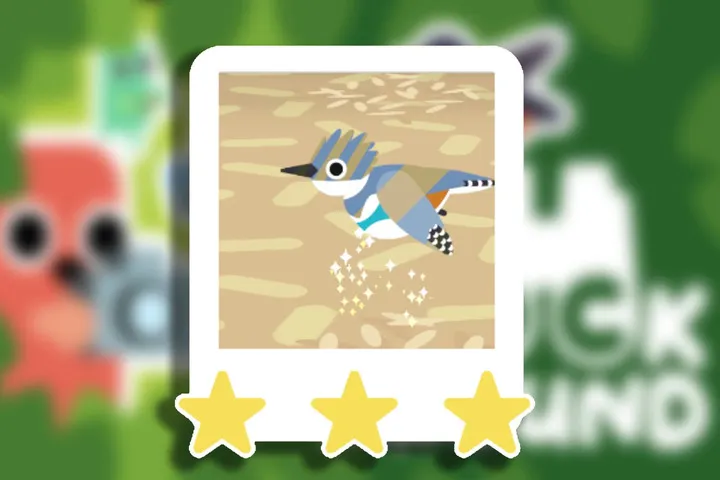
Unlike games with randomized collectibles, rare birds in Flock Around feel ecologically integrated.
Their appearances depend on:
- Weather conditions
- Migration timing
- Habitat preservation
Discovery Through Patience
Finding uncommon species often requires:
- Returning repeatedly to locations
- Observing subtle environmental clues
- Waiting through changing conditions
This makes discovery emotionally rewarding because it feels earned naturally.
The Emotional Experience of Slow Exploration
Slowness as a Design Philosophy
Modern games often emphasize speed and constant stimulation. Flock Around intentionally slows the player down.
Exploration encourages:
- Quiet observation
- Environmental appreciation
- Reflective pacing
Why Slow Gameplay Feels Powerful
The game creates immersion by reducing pressure.
Without combat or urgency dominating the experience, players focus more deeply on:
- Environmental detail
- Animal behavior
- Atmospheric storytelling
This creates a calming but emotionally engaging rhythm.
Dynamic Weather and Atmospheric Photography
Weather Changes Visual Storytelling
Weather dramatically affects both gameplay and photography opportunities.
Examples include:
- Fog obscuring distant movement
- Rain altering flock behavior
- Sunlight changing feather coloration
Atmospheric Variation Increases Replayability
The same location can feel completely different depending on conditions.
This encourages repeated visits because:
- New photographic opportunities emerge
- Bird behavior changes naturally
- Environmental moods evolve constantly
Weather becomes part of the storytelling process.
The Future of Nature Simulation Games
Why Flock Around Matters
Flock Around represents a growing shift toward slower, observation-focused simulation design.
Instead of rewarding domination or efficiency, the game rewards:
- Curiosity
- Patience
- Ecological understanding
A New Direction for Immersive Simulations
The game demonstrates that engaging gameplay can emerge from careful observation rather than constant action.
Its systems suggest a future where simulation games focus more heavily on:
- Ecosystem realism
- Dynamic wildlife behavior
- Emotional environmental immersion
This makes Flock Around stand out within the broader simulation genre.
Conclusion
Flock Around transforms birdwatching and wildlife photography into a deeply immersive simulation built around observation, patience, and environmental realism. Through dynamic flock behavior, migration systems, ecosystem simulation, and atmospheric photography mechanics, the game creates an experience where nature feels alive and independent of the player’s presence.
What makes the game remarkable is how it turns slowness into emotional engagement. Every photograph, migration event, and rare sighting feels meaningful because the world behaves organically rather than mechanically. Players are not simply collecting images—they are participating in a living ecosystem shaped by weather, seasons, and animal behavior.
Ultimately, Flock Around demonstrates how wildlife simulations can evolve beyond simple photography mechanics into complex ecological experiences. By focusing on immersion, observation, and environmental storytelling, the game creates a uniquely calming yet deeply engaging form of interactive exploration.